Blur the face, not the photo
Two clear options on upload: visible, or face blurred. The face is detected automatically. People who already had full blur kept it until they chose otherwise.
WhyThe machine detects. The person decides.
Privacy controls for the touchy moments of a dating app: being seen, being recognised, and going from messages to a phone call.
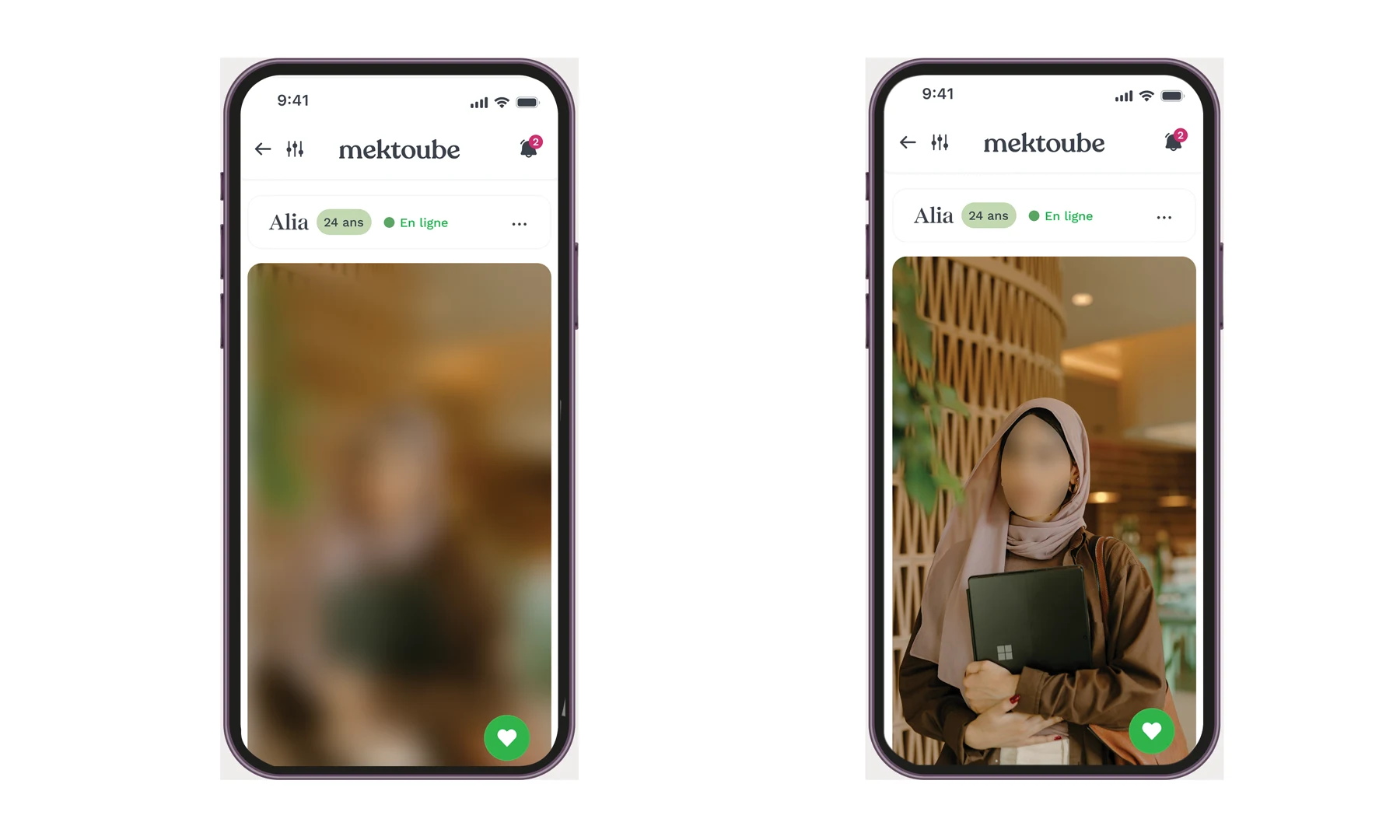
A photo was mandatory. Blurring the whole photo protected people, but it also removed what makes a profile look like a person: posture, place, style.
Let people decide when they become more visible and more reachable.
Two clear options on upload: visible, or face blurred. The face is detected automatically. People who already had full blur kept it until they chose otherwise.
WhyThe machine detects. The person decides.
Accept once, allow future calls, or decline. Declining pauses new requests for seven days. A missed call isn't a refusal: the person who missed it can call back straight away.
WhyWithout a consequence, "no" is just a delay.
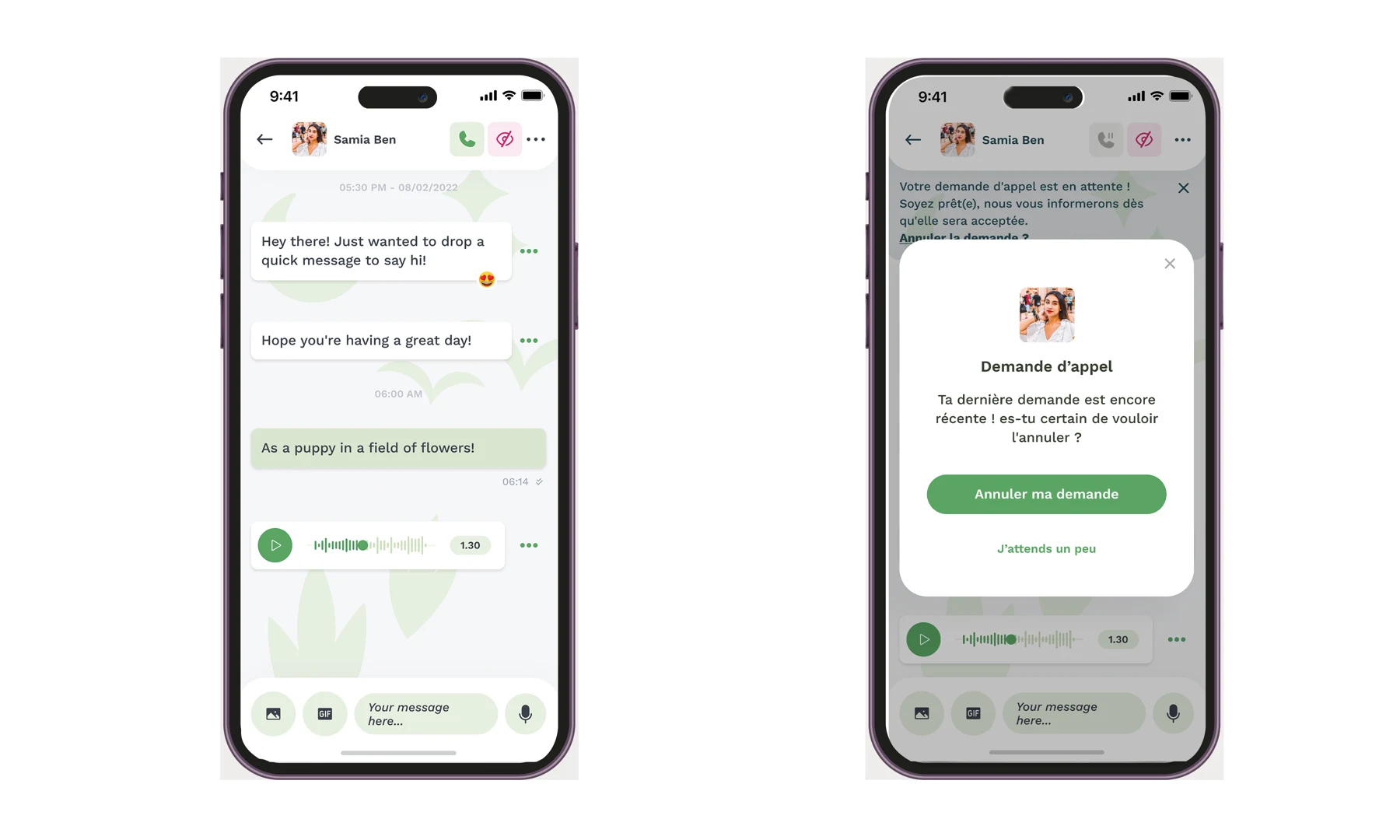
No feature-level uplift claimed. This case is about product rules and interaction detail.
Remote in Europe or MENA, or hybrid from Marseille. Tell me about the product and what's stuck. I read everything.
[email protected]